Kilimanjaro FAQs: Your Questions Answered
Thinking about Kilimanjaro? You are in good company. Africa's highest mountain draws thousands of trekkers every year, and most arrive with the same questions. How hard is it? Which route is best? Will the altitude get me?
We have stood on the summit more than once ourselves, so we know exactly what runs through your head before you book. Here are the questions we hear most often, answered honestly.
How high is Kilimanjaro?
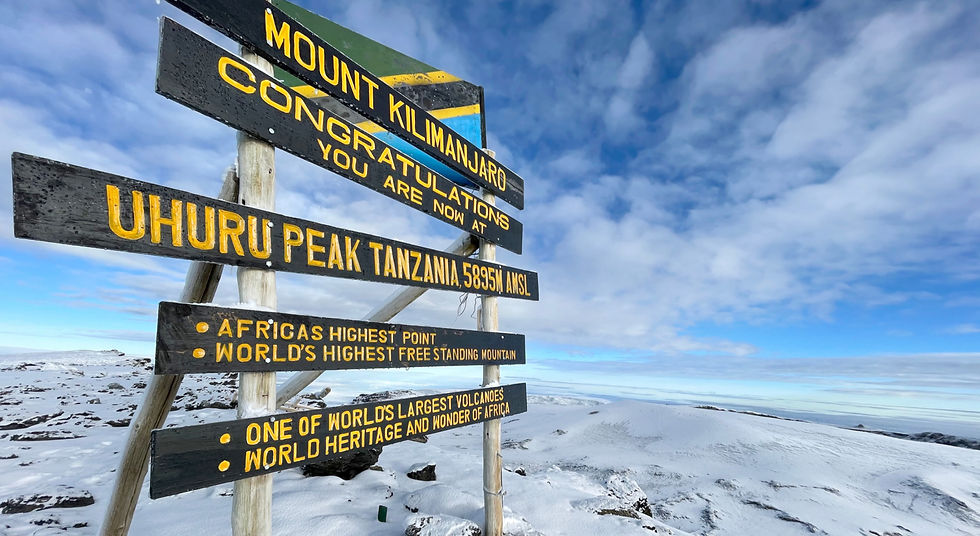
Uhuru Peak sits at 5,895m above sea level. That makes Kilimanjaro the highest mountain in Africa and the tallest freestanding mountain in the world. It is also one of the famous Seven Summits.
Do I need climbing experience?
No. Kilimanjaro is a trek, not a technical climb. You will not need ropes, crampons or ice axes on the standard routes. If you can walk steadily for six to eight hours a day, you have the right foundation.
That said, it is not a stroll. The altitude is what makes it tough, not the terrain.
How fit do I need to be?
Good general fitness makes a real difference. Not to reach the top faster, but to enjoy the journey and recover well each night.
Build up regular hill walks in the months before you go, ideally carrying a loaded daypack. Back to back days on your feet are the best training there is. Stairs, cycling and swimming all help too. Consistency matters more than intensity.
Which route should I choose?
There are seven main routes, and each has its own character.
Machame is the most popular. It is scenic, varied and follows a "climb high, sleep low" profile that helps acclimatisation.
Marangu is the only route with hut accommodation. It is often called the easiest, but shorter itineraries can mean lower summit success.
Lemosho starts on the quieter western side, with beautiful views and excellent acclimatisation over seven or eight days.
Rongai approaches from the north. It is drier and less crowded, a good choice in the rainy season.
Northern Circuit is the longest and quietest route, circling the mountain over nine days.
Umbwe is steep and direct. Best left to experienced trekkers.
Not sure which suits you? Talk to us. We will match the route to your fitness, your timeframe and the experience you want.
How long does it take?
Anywhere from five to nine days, depending on your route. Our advice is simple: choose more days if you can. Extra time on the mountain is the single biggest factor in reaching the summit.
What are my chances of reaching the summit?
Summit success varies hugely by itinerary. On short five day climbs, many trekkers turn back. Longer seven and eight day routes give your body time to adjust and deliver far better odds.
Your operator matters too. Experienced guides who monitor your health daily and set a sensible pace are worth every penny.
Will I get altitude sickness?
Most people feel some effects above 3,000m. Headaches, poor sleep and a reduced appetite are common and usually mild.
The golden rules are simple. Go slowly, drink plenty of water and listen to your guides. You will hear "pole pole" constantly. It means slowly, slowly in Swahili, and it is the best advice on the mountain.
Your guides will check your oxygen levels and pulse every day. If symptoms become serious, the answer is always to descend. Speak to your GP before you travel about whether altitude medication is right for you.
What is summit night like?
Tough, unforgettable and completely worth it. You set off around midnight, climbing by headtorch through the cold and dark. The aim is to reach Stella Point or Uhuru Peak around sunrise.
Watching dawn break over the glaciers and the plains of Tanzania is a moment you will never forget. Then you descend, often a long way, on the same day.
Where will I sleep?
On most routes you will camp. Your crew carries and pitches the tents, so camp is ready when you arrive. The Marangu route uses simple dormitory huts instead.
What will I eat?
More than you expect. Mountain cooks produce hearty, fresh meals: porridge, eggs, soups, stews, pasta and plenty of fruit. Appetite often dips at altitude, so eating well is part of the job. Let us know about any dietary requirements in advance.
Who will be on the mountain with me?
A full crew of guides, porters and a cook. Several crew members support each trekker, carrying equipment, setting up camp, preparing food and keeping you safe.
We pay guides and porters above the wages recommended by the Kilimanjaro Porters Assistance Project (KPAP). Fair treatment of the crew is not negotiable for us.
When is the best time to climb?
Kilimanjaro can be climbed all year, but the dry seasons are the most popular. January to early March and June to October offer the most settled weather.
The long rains fall from late March to May, with shorter rains in November. Climbing then means quieter trails but wetter, muddier conditions.
What is the weather like?
You will pass through five climate zones, from lush rainforest to an arctic summit. Expect warm, humid days at the start and temperatures well below freezing at the top. Layering is everything.
What should I pack?
The essentials are a warm down jacket, a sleeping bag rated for freezing temperatures, broken in walking boots, waterproofs, thermal layers, a headtorch and a daypack. Porters carry your main duffel bag, so you only carry what you need for the day.
We send every client a full kit list after booking.
Do I need a visa or vaccinations?
UK passport holders need a visa to enter Tanzania. Apply online through the official eVisa system well before travel, and check the latest guidance on GOV.UK.
For vaccinations, speak to your GP or a travel clinic at least eight weeks before departure. You may need a yellow fever certificate, depending on your route into Tanzania.
Do I need travel insurance?
Yes. Make sure your policy covers trekking up to 6,000m, including emergency evacuation and helicopter rescue. Many standard policies stop well below that, so check the small print.
How much should I tip?
Tipping is an important part of crew income on Kilimanjaro and is expected at the end of your climb. Amounts vary with group size and crew numbers. Our Kilimanjaro tipping guide has the full breakdown.
Ready to climb?
Kilimanjaro is achievable for most people with the right preparation, the right route and the right team. Our group departures and private climbs are built around safety, fair crew practices and giving you the best possible chance of standing on the Roof of Africa.
Got a question we have not covered? Get in touch. We would love to help you plan your climb.


Comments